Jonas Schmitt · 31 August 2026
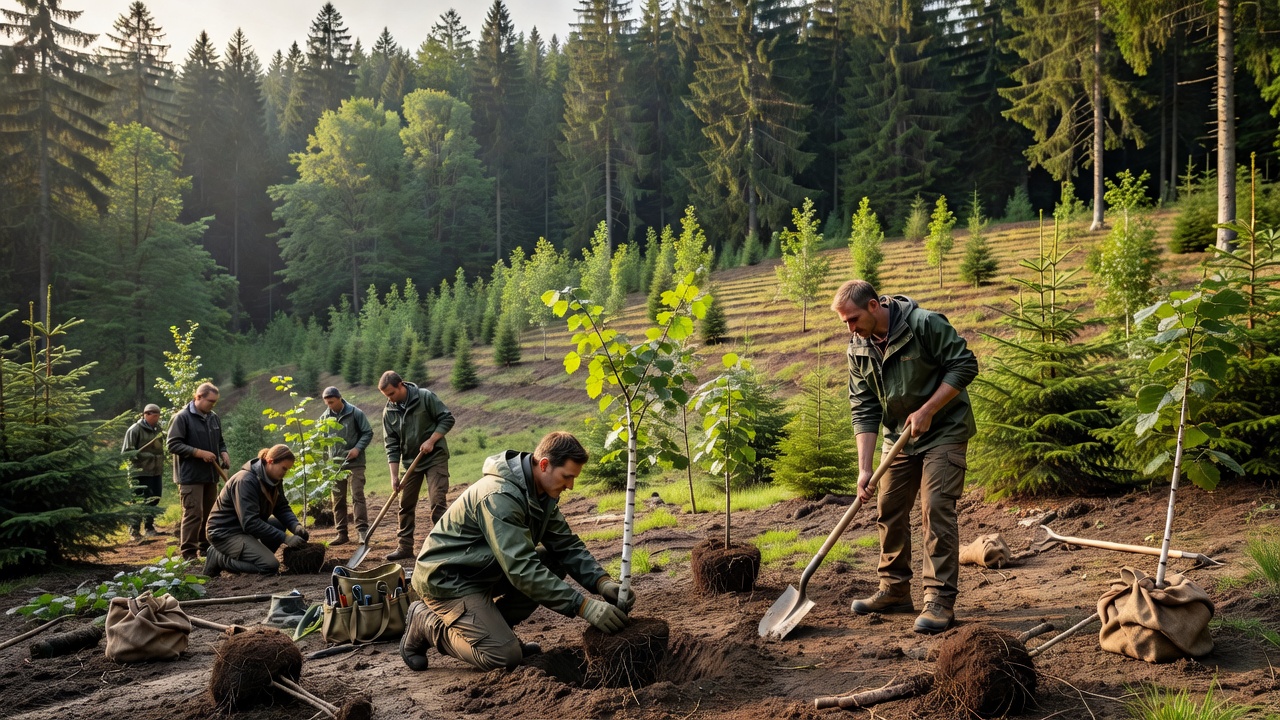
The Silberwald Forest has seen a notable increase in its tree cover thanks to an ongoing reforestation project. Over the last twelve months volunteers and experts have planted thousands of seedlings across previously barren areas. This effort is part of a broader strategy to combat deforestation and enhance the forest's resilience against environmental challenges including shifting weather patterns and soil degradation.
Implementation Strategies Employed
The project utilized a combination of traditional planting techniques and modern technology. Native species such as European beech and sessile oak were selected for their adaptability to the local climate. Drones were employed to distribute seeds in steep terrains where manual planting was difficult. Local schools and community groups participated in weekend planting events fostering a sense of stewardship among residents. Monitoring systems including soil sensors and camera traps have been installed to track growth and wildlife activity. Initial results indicate a survival rate exceeding eighty percent for the new plantings. The total area reforested amounts to approximately one hundred fifty hectares significantly boosting the overall canopy density. Additional funding from regional government grants and international conservation organizations has allowed for the expansion of the project beyond initial targets. Partnerships with universities have provided scientific oversight ensuring that ecological best practices are followed. Challenges such as invasive species and periods of drought were addressed through targeted interventions like mulching and irrigation support.
Observed Environmental Impacts
Early signs of ecological recovery are evident in the increased presence of birds and small mammals within the restored zones. Carbon sequestration rates are projected to rise by twenty percent over the next decade due to the new growth. Soil erosion has decreased measurably improving water quality in nearby streams. Biodiversity surveys show a rise in insect populations which supports the food chain for higher species. These developments contribute to the forest's role as a vital green lung for the surrounding region. Future phases will focus on connecting fragmented habitats to allow for better species migration. Long-term monitoring will continue to assess the project's success and inform adjustments as needed. Community education programs are also planned to maintain public engagement with conservation efforts. The expansion has already attracted attention from neighboring regions seeking similar models for habitat restoration.